Architecture Summary
Repository-local proof surface for edge, mobile, and local-first runtime systems, backed by Python service or lab runtime, Container build surface, Local compose environment.
Free idle-game economy tuning sheet for Unity prototype balancing.
Built for indie game developers and Unity learners. Use the readiness check below, inspect the implementation, and compare public aggregate demand without submitting project data.
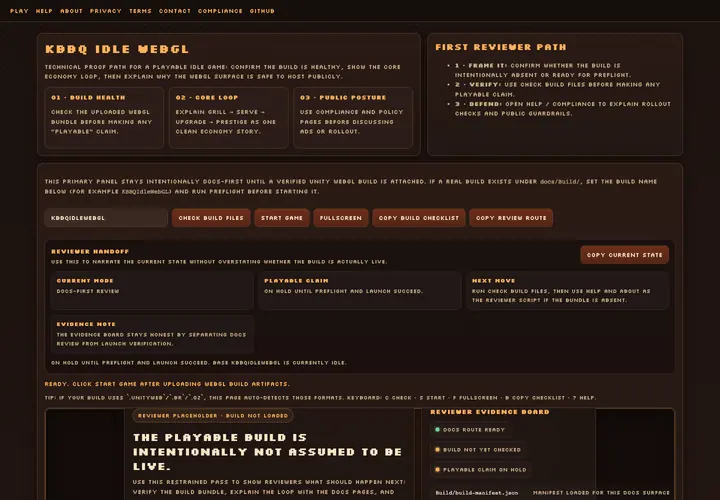
Your selections stay in this browser. Nothing entered here is uploaded.
These notes are derived from this repository's checked-in system architecture, not generic product copy.
Repository-local proof surface for edge, mobile, and local-first runtime systems, backed by Python service or lab runtime, Container build surface, Local compose environment.
Primary domain: edge, mobile, and local-first runtime systems.
Operating model: optional sync backends, signed release artifacts, edge observability, and constrained compute envelopes
Containerized runtime path suitable for repeatable local, staging, or managed service deployment Edge-first deployment model with server-side AI adapters and public-safe secrets handling Local-first runtime that can add sync, edge telemetry, and signed release promotion without...
identity boundary and least-privilege service access environment separation for local, staging, and managed runtime paths secret storage outside source and deterministic fallback for missing credentials observability hooks for logs, metrics, traces, and audit events rollback path...
anonymous aggregate game-economy resource interest and CTA counts
ads allowed only on public game-design resource pages; gameplay telemetry, saves, and purchase-related flows are ad-free
Only four coarse fields are accepted after consent: repository, allowlisted event, public surface, and consent-policy version. Raw inputs, URLs, referrers, identities, files, prompts, and sensitive details are rejected.